Building the Next Bond: Inside the Training Grounds Shaping Australia's Future Action Stars
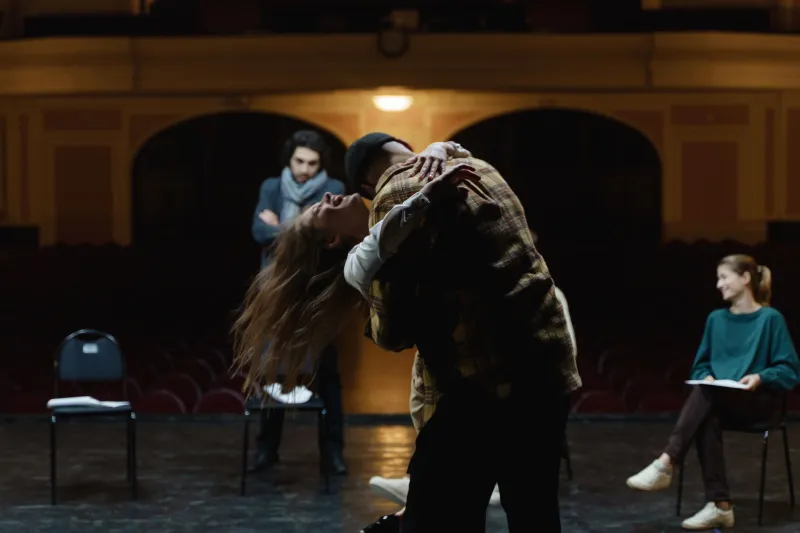
Every great action star has an origin story. Before the franchise, before the Hollywood agent, before the magazine covers and the international press junkets, there was a classroom. A rehearsal space. A drama school corridor where someone decided to push past the embarrassment of falling badly and try the roll again. And again. And again.
Australia's pipeline of action talent doesn't happen by accident. It's the product of decades of deliberate training, institutional investment, and a culture that takes performance craft seriously in ways that often surprise the international industry when it finally shows up to cast. We went looking for where tomorrow's action stars are being built — and what we found was more sophisticated than most people outside the industry realise.
NIDA: The Establishment That Keeps Producing Outliers
The National Institute of Dramatic Art in Sydney is the institution everyone mentions first, and for good reason. Its alumni list reads like a roll call of Australian cinema's most significant names — Cate Blanchett, Hugo Weaving, Judy Davis, Richard Roxburgh. The school's reputation precedes it internationally, and international casting directors treat a NIDA credit on a résumé as a meaningful signal of technical readiness.
What NIDA does for action-oriented performers specifically is provide an exceptionally rigorous physical training foundation. The school's movement programme — drawing on Lecoq technique, Alexander Technique, and extensive physical theatre work — produces graduates who understand their bodies as instruments in a way that purely screen-focused training often doesn't.
For action work, that matters enormously. A stunt coordinator can teach a performer the mechanics of a fight sequence. What they can't teach — not quickly, anyway — is how to make a body read as genuinely dangerous or genuinely vulnerable on camera. That quality of physical intelligence is something NIDA develops systematically over three years, and it's why the school's graduates tend to land on action sets and immediately earn the respect of the stunt team.
Current students at NIDA are increasingly aware of the action pathway as a legitimate career trajectory. The stigma that once attached to genre work — the idea that spy thrillers and blockbusters were somehow beneath the serious actor — has largely dissolved. The students coming through now want both: the classical training and the franchise opportunity. NIDA, to its credit, is adapting its curriculum to reflect that reality.
WAAPA: The West Coast Factory
The Western Australian Academy of Performing Arts in Perth operates in NIDA's shadow in terms of public profile, but the industry knows better. WAAPA's acting programme has produced a remarkable stream of screen-ready talent over the past two decades, and its approach to physical performance is arguably more integrated into the curriculum's core than at some eastern-seaboard institutions.
What distinguishes WAAPA graduates in action contexts is often their capacity for sustained physical performance under pressure. The school's training culture is intense — not in a punishing way, but in the sense that students are expected to show up fully, every day, and to build stamina alongside technique. That conditioning translates directly to the demands of action filming, where a single sequence might require dozens of takes across a twelve-hour day.
Several WAAPA graduates have already made significant inroads into international action franchises, and the school has developed informal relationships with Australian casting directors who specifically seek out its graduates when physical performance capability is a priority requirement.
VCA: Where the Experimental Meets the Marketable
The Victorian College of the Arts in Melbourne takes a slightly different approach. The school has historically been more associated with theatre of a conceptual bent than with commercial screen performance — but that reputation obscures how effectively its graduates transition into action-oriented screen work.
The VCA's strength lies in its emphasis on psychological depth. Students are pushed hard to understand why a character moves the way they move, fights the way they fight, responds the way they respond under extreme pressure. For action performance specifically, that psychological grounding is what separates a convincing fight sequence from one that looks choreographed.
Spy thrillers in particular reward this kind of preparation. The best action sequences in the genre aren't really about the physicality — they're about what the physicality reveals about character. A VCA-trained performer who's spent three years interrogating motivation is going to bring something to a fight scene that a technically proficient but psychologically underprepared performer simply can't match.
The New Contenders: Screen-Specific Training
Beyond the traditional drama schools, a new ecosystem of screen-focused training programmes has emerged across Australia in the past decade. Schools like the New York Film Academy's Australian campus, the Australian Film Television and Radio School's acting for screen programmes, and a growing number of independent studios in Sydney and Melbourne are offering more targeted pathways for performers who know they want screen work and aren't interested in the theatre-heavy curriculum of the major institutions.
For action-specific training, these programmes often incorporate elements that the traditional schools have been slower to adopt: on-camera stunt familiarisation, wire work introductions, firearm safety and handling protocols, and intensive screen combat workshops delivered in partnership with working stunt coordinators.
The graduates of these programmes are arriving on set with a different kind of readiness — less theoretical, more immediately practical. Stunt coordinators who work with them regularly report that the gap between the first day of training and genuine usefulness on set has compressed significantly compared to even five years ago.
What Separates the Ones Who Make It
Talk to anyone who trains action performers in Australia long enough and the same qualities emerge when you ask what separates the students who build international careers from those who don't.
Physical adaptability comes up constantly. The ability to learn new movement vocabularies quickly — to absorb a fighting style, a weapon discipline, or a stunt sequence and make it look owned rather than borrowed — is something that can be developed but can't be entirely taught. Students who have it tend to know it early. Those who don't often compensate in other ways, but the ceiling is lower.
Psychological resilience is equally important. Action filming is physically demanding, frequently repetitive, and occasionally genuinely dangerous. Performers who struggle with the unglamorous reality of the work — the waiting, the physical exhaustion, the constant repetition in service of a two-minute sequence — tend to self-select out of the pathway.
And then there's the quality that's hardest to define but easiest to recognise: presence. The camera's relationship with a performer is not fully explainable by technique or training. Some people simply have something that the lens responds to, and no amount of craft can manufacture it from scratch. The training programmes that produce the most successful action performers are, at some level, also in the business of identifying who has that quality and getting out of their way.
Australia has never been short of that kind of talent. The schools are just getting better at finding it faster.