Not Your Father's Action Hero: How Aussie Stars Are Blowing Up Hollywood's Leading Man Blueprint
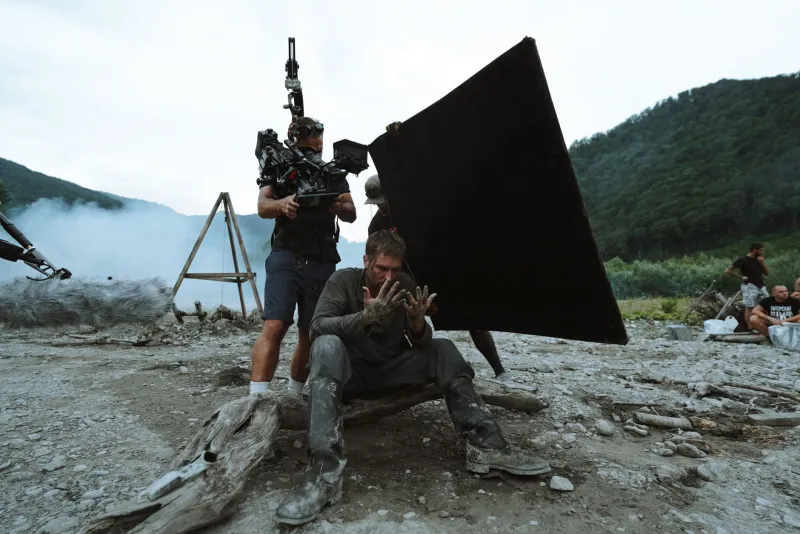
For a long time, Hollywood had a very specific idea of what an action hero was supposed to look like. Broad shoulders. Symmetrical face. Age frozen somewhere between 35 and forever. A physique that suggested the actor had never once considered eating a meat pie on a Sunday afternoon. That template was so rigid you could set a watch by it.
Then the Australians showed up and started messing with the blueprint.
It hasn't happened overnight, and it hasn't happened without resistance. But there's a slow, undeniable shift underway in how studios are casting their action leads — and a disproportionate number of the faces driving that change are from right here. From regional Queensland to inner-city Melbourne, a new generation of Australian actors is landing blockbuster roles not because they conform to the old mould, but because they've quietly shattered it.
What the Old Blueprint Actually Looked Like
Let's be honest about what we're talking about. The classic Hollywood action archetype — particularly in the spy thriller genre — was almost comically narrow. Think late-era Schwarzenegger. Think the era when studios seemed to believe that a leading man's emotional range and his neck circumference were directly proportional.
Even into the 2000s, the formula persisted. Action heroes were expected to be ageless, expressionless, and built like they'd been assembled in a facility. Wrinkles were a liability. A realistic body was a casting problem. Anything that deviated from the Platonic ideal of chiselled masculinity was quietly shuffled into the supporting cast.
Australian actors, particularly those coming up through local television and independent film, were trained in a completely different tradition. Australian drama — whether it's the gritty realism of shows like Underbelly or the character-heavy work coming out of the ABC — has always prized authenticity over aesthetics. You earn your place on screen by being believable, not beautiful.
That training shows.
The Shift Casting Directors Are Noticing
Talk to anyone working in Hollywood casting right now and a pattern emerges. There's a growing appetite for leading men who look like they've actually lived a life. Actors who carry weight — not just in the physical sense, but in the sense that their faces tell a story before they've said a word.
Australian actors keep coming up in those conversations.
Part of it is practical. Streaming platforms have expanded the definition of a blockbuster, and with that expansion has come a broader audience with broader tastes. The subscriber in suburban Brisbane watching a spy thriller on a Tuesday night isn't necessarily looking for the same thing as the cinema-goer who grew up on 1980s action films. They want someone they can believe in. Someone who feels real.
Aussie actors, shaped by a screen culture that rewards truth over spectacle, tend to deliver exactly that.
Age, Body, and the New Authenticity
One of the more radical shifts — and it genuinely is radical by Hollywood standards — is the growing willingness to cast action leads who don't pretend to be ageless. The spy thriller genre in particular has long been obsessed with youth, or at least the cosmetic illusion of it.
What we're seeing now, with a number of Australian actors leading the charge, is a reclamation of age as an asset. An actor in his mid-forties who looks like he's in his mid-forties brings something to a role that no amount of post-production smoothing can manufacture. There's credibility there. A weathered face reads as experience. A body that looks like it belongs to a human being rather than a CGI render makes the action feel grounded.
Body diversity is part of this conversation too. The idea that an action hero needs to be shredded to within an inch of his life is losing its grip on the industry. Audiences are increasingly sceptical of it — there's something almost alienating about watching a protagonist whose physique requires a team of trainers, chefs, and pharmaceutical consultants to maintain. It creates distance rather than connection.
Australian actors — many of whom have spoken openly about resisting the pressure to conform to extreme physical standards — are helping normalise a different kind of action hero body. One that looks capable and strong without looking like it belongs in a supplement ad.
Why Australia Produces This Kind of Actor
This isn't accidental. There are structural reasons why Australian talent tends to arrive in Hollywood with a different relationship to their own physicality and presence.
The Australian screen industry has never had the budget to prioritise surface over substance. When you're making television or independent film on tight resources, you need actors who can do the work — who can carry a scene with nothing but their face and their instincts. You don't have time or money to compensate for someone who looks great but can't deliver.
That environment produces a particular kind of performer. Technically rigorous. Comfortable with vulnerability. Unconcerned with maintaining a carefully managed public image of physical perfection. By the time an Australian actor lands in a Hollywood audition room, they've usually been through the kind of training that values craft over appearance.
Hollywood casting directors, increasingly, are noticing the difference.
The Ripple Effect for Aussie Talent
Here's where this gets genuinely exciting for Australian audiences and for the local industry. When the definition of a Hollywood leading man expands, the pool of Australians who can credibly compete for those roles expands with it.
For years, the pathway for Aussie actors into major action franchises was narrow and specific. You needed to look a certain way, carry yourself a certain way, and ideally be willing to spend the better part of a year in a gym to get there. That filtered out enormous amounts of talent that simply didn't fit the physical template, regardless of ability.
As that template loosens, more Australians get a seat at the table. Character actors who might previously have been limited to supporting roles are being looked at for leads. Actors who've built careers on the strength of their screen presence rather than their physique are finding that Hollywood is finally ready to meet them where they are.
It's not a revolution yet. The old aesthetic still has significant pull in certain corners of the industry, and there's no shortage of studios still chasing the familiar formula. But the direction of travel is clear, and Australia is — perhaps unexpectedly — one of the forces pushing it.
What Comes Next
The honest answer is that nobody fully knows. The entertainment industry is notoriously resistant to predicting its own evolution. What we do know is that the Australians who are reshaping this conversation aren't doing it through manifestos or press releases. They're doing it by showing up, doing the work, and being so undeniably compelling on screen that studios can't ignore them.
That's a very Australian way to change things. No fuss. No announcement. Just results.
And from where we're sitting at Operation Oz, that's something worth paying attention to.