Born to Be Bad: Why Hollywood Keeps Casting Australians as Its Most Dangerous Villains
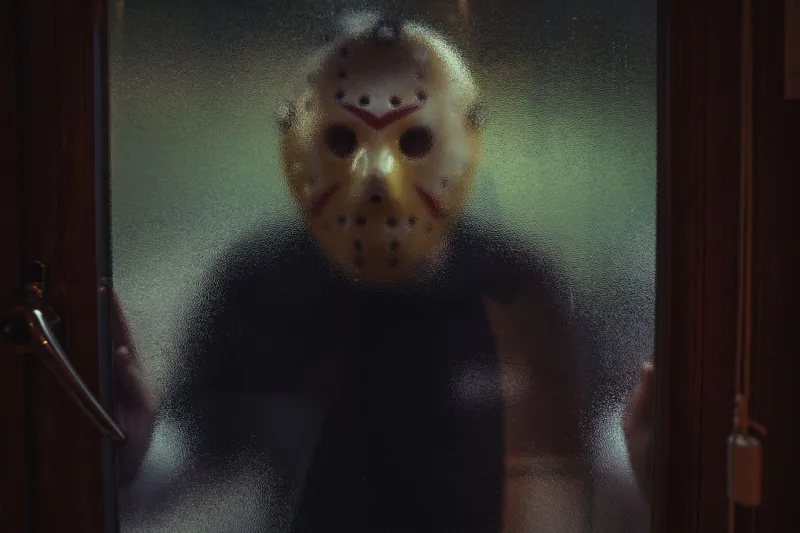
There's a particular kind of chill that runs through a cinema when the villain walks into frame. Not the loud, scenery-chewing kind of bad guy — but the composed, terrifyingly reasonable one. The type who could order someone's demise between sips of coffee and never once raise their voice. Hollywood has been reaching for that specific flavour of menace with increasing regularity, and more often than not, the actor delivering it holds an Australian passport.
It's not a coincidence. It's a pattern, and it's worth unpacking.
The Stillness Factor
Ask anyone who works in casting what separates a memorable villain from a forgettable one, and the word "stillness" comes up fast. The best antagonists don't need to fill every scene with noise. They command attention through restraint — through what they don't do as much as what they do.
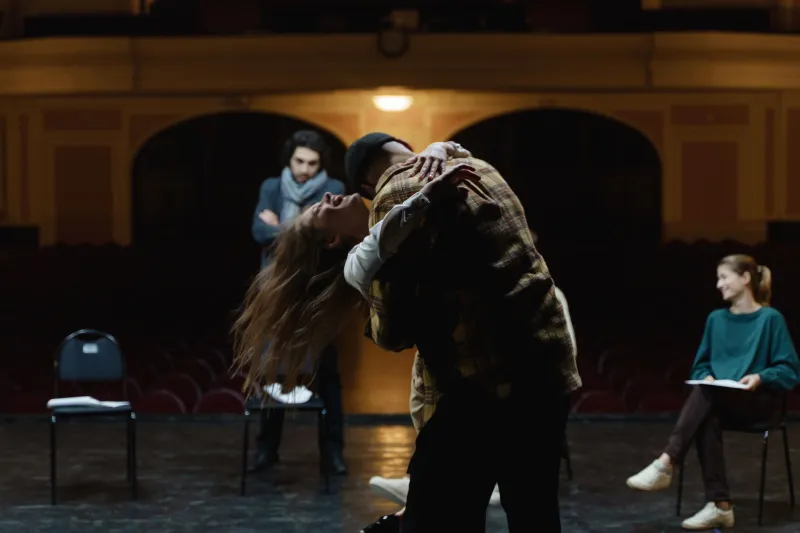
Australian actors, by and large, are trained in a performance tradition that prizes this quality. The major drama schools — NIDA, VCA, WAAPA — put serious emphasis on physical economy and psychological interiority. Students spend years learning to locate emotional truth internally before it ever reaches their face. When that training collides with a villain role that demands cold calculation over theatrical fury, the results tend to be electric.
Hugo Weaving's Agent Smith in The Matrix trilogy remains one of the defining antagonist performances in modern blockbuster history — not because he's loud, but because he's relentless and utterly unreadable. Cate Blanchett brought a crystalline menace to Indiana Jones and the Kingdom of the Crystal Skull that outshone nearly everything else in the film. Guy Pearce has made a career out of playing men whose charm masks something deeply unsettling. None of these performances rely on volume. They rely on precision.
Playing the Long Game
One theory that gets floated a lot — particularly among Australian directors who've worked on both sides of the Pacific — is that Aussie actors are exceptionally good at playing characters who are patient. The best spy thriller villains aren't reactive. They're architects. They've already thought ten moves ahead by the time the hero figures out there's a game being played.
That quality of deliberate, measured intelligence is genuinely difficult to perform convincingly. It requires an actor to hold information — to know things their character knows without telegraphing it to the audience too early. It's a discipline, and it's one that Australian performers seem to have absorbed deeply.
Richard Roxburgh's turn as the Duke in Moulin Rouge! showed Baz Luhrmann's audiences what happens when that restraint cracks — and the result was genuinely frightening. More recently, Jai Courtney has explored antagonist-adjacent territory across multiple franchise outings, while younger talent like Toby Wallace has demonstrated a capacity for unsettling complexity that has international casting directors paying close attention.
The Accent Advantage (Again)
It would be remiss to ignore the role the Australian accent plays in all of this. There's a reason Hollywood often casts Aussie actors in roles that require a kind of cultural ambiguity — a character who doesn't slot neatly into American or British expectations. The accent occupies an interesting middle ground: educated enough to read as sophisticated, grounded enough to carry genuine threat.
For villain roles specifically, that ambiguity is gold. A villain who feels geographically unplaceable is harder to dismiss as a stereotype. They become more universal — and therefore more threatening. When an Australian actor chooses to lean into their natural voice rather than adopt an American drawl, the effect can be disorienting in precisely the right way.
Casting directors who work across spy franchises and action tentpoles have noted this openly. The Australian voice, when deployed with intention, reads as both worldly and dangerous — a combination that's genuinely rare and hard to manufacture.
The Underdog Psychology
Here's an angle that doesn't get discussed enough: Australians have historically had to fight for space in Hollywood. The industry didn't hand them leading roles or prestige projects by default. That experience of having to prove yourself, of operating in rooms where you're underestimated, creates a particular psychological edge that translates remarkably well to antagonist performances.
Villains, at their most compelling, believe they are completely justified. They've been underestimated, overlooked, or denied what they feel is rightfully theirs — and they've decided to stop playing by other people's rules. That's not a difficult emotional landscape for an Australian actor to access. Many of them have lived a version of it.
There's an authenticity to the grievance that Australian performers bring to these roles that audiences can feel, even if they can't articulate it. The villain doesn't feel like a narrative device. They feel like a person who made a series of very understandable choices that led somewhere very dark.
The Roles That Prove the Point
Beyond the icons, there's a growing roster of Australian actors building reputations specifically through villain and antagonist work. Ben Mendelsohn has made a global career out of playing men who are simultaneously sympathetic and terrifying — his work in Rogue One, Ready Player One, and Bloodline forms one of the most consistent antagonist portfolios in contemporary film and television.
Mendelsohn himself has spoken about the importance of never playing a villain as simply evil. Every character, in his view, has a logic — and finding that logic is what separates a performance that lands from one that falls flat. That philosophy is deeply embedded in how Australian actors are trained, and it's producing results that Hollywood can't ignore.
The pipeline isn't slowing down either. With Australian television continuing to produce morally complex dramas that give performers room to explore dark material in depth, the next generation of Aussie antagonists is already in development — learning the craft, building the credits, and waiting for the call that puts them in a room with the franchise that'll make them the villain everyone talks about.
Hollywood has noticed. And honestly? That should make us all a little nervous. In the best possible way.