G'Day, Bond: How the Australian Accent Became Hollywood's Hottest Spy Asset
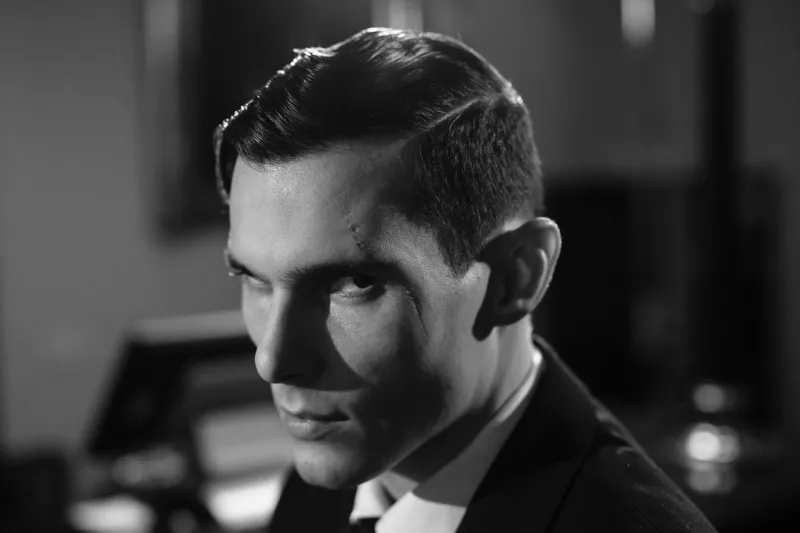
There was a time — not so long ago, honestly — when Australian actors arriving in Hollywood were handed a very clear instruction from their agents: dial it back. Soften the vowels. Flatten the twang. Make it easier on American ears. For decades, the Aussie accent was treated like an awkward houseguest at the spy thriller party — tolerated, but quietly asked to sit in the corner.
Something has shifted dramatically. In casting rooms from Los Angeles to London, the Australian accent is no longer being hidden. It's being requested.
From Liability to Luxury
The transformation didn't happen overnight. You could trace the early cracks in the old thinking back to the mid-2000s, when Australian actors started landing roles not despite their accents, but with them fully intact. Hugo Weaving's clipped, precise delivery gave his villainous turns an edge that felt genuinely unsettling. Cate Blanchett brought a cool, authoritative intelligence to roles that demanded characters who seemed to know more than everyone else in the room — which, in spy cinema, is basically the whole job description.
But the real turning point came as franchise filmmakers began deliberately chasing something they struggled to define at first. "Authenticity" was the word that kept coming up in casting conversations — though it often meant something more specific than that. What they were actually after was otherness. A voice that didn't belong to the familiar American or British registers that audiences had been trained to associate with either the hero or the villain. Something that sat slightly outside the expected, that made you pay closer attention.
The Australian accent, it turned out, does exactly that.
The Accent as Character Architecture
Casting directors working on major action and thriller productions have increasingly noted that the Australian accent carries a particular dramatic weight that's difficult to manufacture. There's an inherent self-assuredness to it — a quality that reads on screen as someone who isn't trying to impress you, which is enormously useful when you're building characters who operate in the shadows.
For villains, it introduces a layer of unpredictability. Western audiences have been conditioned to map certain accents onto certain archetypes. The clipped British accent signals refined menace. The American drawl signals either heroism or blue-collar grit. The Australian accent disrupts both those expectations, which means the audience can't quite get their footing — and in a spy thriller, keeping the audience slightly off-balance is pure gold.
For protagonists and allies, the effect is different but equally powerful. There's a frankness embedded in Australian speech patterns — a directness — that translates on screen as someone who will tell you exactly what they think, whether you want to hear it or not. In a genre built on deception and double-crosses, a character who sounds like they're incapable of pretension becomes instantly compelling. You trust them, even when the script is telling you not to.
The Franchise Effect
The spy genre's embrace of Australian talent has created a feedback loop that's hard to ignore. As more Australian actors land significant roles in prestige thrillers — with their accents not just permitted but featured — younger casting directors have begun actively seeking that sound out. It's become something of a cultural shorthand within the industry: cast an Australian, and you're signalling a certain level of sophistication to your audience.
There's also a practical dimension that doesn't get talked about enough. Australian actors, by and large, arrive with extraordinary technical range. The training culture here — built on theatre, on ensemble work, on a screen industry that demands versatility — produces performers who can hold an accent and deliver physical performance and navigate complex emotional terrain simultaneously. For an action-thriller director juggling a hundred production variables, that reliability is genuinely priceless.
The Mission: Impossible franchise, the various Marvel and DC productions shot in Australia, and a growing slate of streaming spy dramas have all contributed to normalising — and then elevating — the Australian voice in these spaces. What was once a curiosity has become an expectation.
The Villain Problem (And Why It's Actually a Compliment)
Here's the uncomfortable truth that Australian actors navigate with admirable good humour: a significant chunk of the roles being offered are villain-adjacent. The accent, for all its newfound glamour, still triggers something in American and British audiences that reads as slightly threatening. Not overtly — not in a way that feels like a stereotype — but in that subtle, unplaceable way that makes for truly great antagonists.
Australian performers have largely leaned into this rather than fighting it. And why wouldn't they? The best spy thriller villains are the ones audiences can't stop watching — the ones who get the sharpest dialogue, the most interesting motivations, and the scenes that everyone remembers long after the credits roll. Being typecast as "too interesting to be the hero" is, as problems go, a fairly excellent one to have.
The more interesting development, though, is the growing number of Australian actors being positioned as the moral centre of spy narratives — the handler, the conscience, the ally who tells the protagonist hard truths. These roles require a different kind of screen presence: grounded, authoritative, warm without being soft. The Australian accent, it turns out, carries all of those qualities simultaneously.
What This Means for the Genre
Spy cinema has always been a genre that feeds on the exotic — on the idea that danger comes from somewhere else, that intrigue lives in the spaces between cultures and languages. For most of its history, that otherness was mapped onto specific geographies: Eastern Europe, the Middle East, East Asia. The Australian accent introduces a different kind of otherness — one that's harder to locate, harder to dismiss, and harder to predict.
For Australian audiences watching these films, there's something quietly satisfying about seeing that accent treated as an asset rather than an obstacle. We've spent a long time being told that our cultural exports need to sand down their edges to travel internationally. The spy genre, of all places, has decided our edges are exactly what it was missing.
Hollywood has finally cracked the code. The Australian accent isn't something to be managed. It's something to be deployed. And in a genre where every detail is a weapon, that's the highest compliment the industry knows how to pay.