Lights, Camera, G'Day: How Australia Became Hollywood's Favourite Action Playground

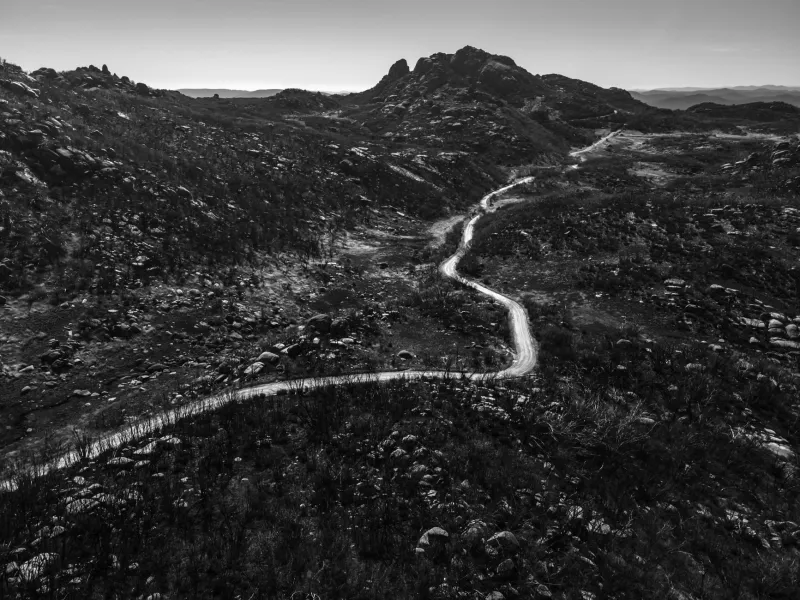
Photo by Photo by Gabriel Francesco on Unsplash on Unsplash
There's a running joke among crew members at Sydney's Fox Studios that the car park has seen more A-listers than the Oscars red carpet. It's not far off. In recent years, Australia has transformed from an occasional filming destination into the genuine nerve centre of global blockbuster production — and Hollywood's biggest action franchises are the ones doing the bulk of the booking.
Marvel, Mission: Impossible, Aquaman, Thor — the list of major productions that have planted their flags on Australian soil keeps growing, and there are very good reasons why studios keep coming back. It's not just the scenery, though that certainly doesn't hurt.
Follow the Money (and the Tax Rebate)
Let's be honest about where the conversation starts: money. The Australian Government's Location Incentive program, combined with state-based rebates, means studios can recoup a significant chunk of their Australian production spend. The federal Location Offset alone offers a 16.5% rebate on qualifying Australian production expenditure, and when you layer state government sweeteners on top — particularly from New South Wales and Queensland — the financial case for filming here becomes genuinely hard to argue with.
For a film with a $200 million budget spending heavily in Australia, that's not pocket change. It's a structural advantage that European and North American locations simply can't match at scale. Producers who've worked across multiple continents consistently point to Australia's incentive framework as one of the most competitive in the world for big-budget productions.
But here's the thing — the rebates get studios through the door. What keeps them coming back is everything else.
Infrastructure That Can Handle the Big Leagues
Fox Studios Australia in Moore Park, Sydney, remains the crown jewel, but it's far from the only player. Village Roadshow Studios on the Gold Coast has hosted productions ranging from the DC Extended Universe to big-budget Netflix originals. The Docklands Studios in Melbourne have steadily expanded their footprint. And Queensland's broader screen ecosystem — bolstered by years of government investment — now offers facilities that can genuinely compete with anything Pinewood or Atlanta has to offer.
What's changed in the past decade isn't just the size of these facilities, but their sophistication. Virtual production stages equipped with LED volume technology — the same tech that revolutionised The Mandalorian — are now operational in Australia. That means studios aren't just coming here for location shoots; they're building entire digital production pipelines on Australian soil.
Crew depth has grown to match. The Australian film industry has always punched well above its weight in technical talent, but the sustained influx of major productions has created a generation of crew members with genuine blockbuster experience. Cinematographers, stunt coordinators, VFX supervisors, production designers — the local talent pool is now deep enough that studios don't need to fly in entire departments from Los Angeles.
The Location Advantage Nobody Talks About Enough
Australia is, geographically speaking, a cheat code for production designers. Within a few hours of any major city, you can access desert landscapes, ancient rainforest, dramatic coastline, alpine terrain, and contemporary urban environments that can convincingly double for locations across Asia, the Americas, and beyond.
The Daintree Rainforest in Far North Queensland has stood in for jungle environments across multiple action franchises. The Pinnacles in Western Australia have been used to evoke alien and desert worlds. Sydney's CBD has doubled for everything from unnamed American cities to futuristic metropolises. The sheer variety is almost unfair.
For spy thrillers and action franchises in particular — genres that thrive on globe-trotting visual variety — this geographic flexibility is enormously valuable. Instead of flying a cast and crew to five different countries across a 120-day shoot, a smart production can replicate much of that variety within Australian borders, dramatically simplifying logistics and controlling costs.
What the Producers Are Saying
The sentiment from the production side is consistent: Australia delivers. Crews are professional, experienced, and — this comes up repeatedly — genuinely enthusiastic about the work. There's a collaborative energy on Australian sets that directors and producers from overseas frequently comment on.
The country's relative safety, stable infrastructure, and straightforward permitting processes also reduce the operational headaches that plague shoots in more volatile or bureaucratically complex locations. When you're managing a production of this scale, predictability has real value.
Australian producers who've worked as local partners on international co-productions note that the relationship between local crews and international studio teams has matured significantly. There's less of the adjustment period that used to characterise early days on a major foreign production. Everyone speaks the same professional language now.
The Ripple Effect
The impact of this production boom extends well beyond the film industry itself. Hospitality, transport, construction, catering, and accommodation sectors in production-heavy regions have all felt the benefit. The Gold Coast, in particular, has built a significant portion of its economic identity around screen production in a way that would have seemed fanciful twenty years ago.
For aspiring Australian filmmakers and crew members, the effect has been transformative. Opportunities that previously required a move to Los Angeles or London are now available domestically. Craft skills that were once imported are now being developed and exported. Australia is increasingly a net contributor to global screen culture, not just a recipient of it.
What Comes Next
The competition is real. The UK, Canada, and various Eastern European countries all offer competitive incentives and are actively courting the same productions. Australia can't afford to be complacent, and there are ongoing conversations at both federal and state levels about how to keep the incentive framework competitive as the global landscape shifts.
But the fundamentals are strong. The infrastructure investment of the past decade isn't going anywhere. The crew base that's been built on the back of sustained production activity represents a genuine long-term asset. And Australia's location advantages — the geography, the climate, the sheer visual variety — are simply not replicable elsewhere.
Hollywood found its favourite action playground. And for now, it's got an Australian flag flying out the front.