Behind Enemy Lines Down Under: How Aussie Directors Are Cracking the Spy Thriller Code
For decades, the spy thriller was practically a European postcode. London fog, Swiss bank vaults, Moscow dead drops — the genre had its geography locked in tight. But something's shifted. A generation of Australian filmmakers has quietly infiltrated the world of espionage cinema, and they're not just playing by the old rules. They're rewriting them entirely.
It's not as surprising as it might sound. Australia has always had a complicated, fascinating relationship with intelligence and geopolitics. Sitting at the intersection of the Pacific and Indian Oceans, sandwiched between Western alliances and the rising influence of Asia, this country has a spy story of its own that's been waiting to be told properly. And now, finally, the directors doing the telling are Australian.
Ditching the Double-O Playbook
The classic spy film formula is well worn: a suave operative, a shadowy organisation, a ticking clock, and a villain with a monologue problem. Australian directors coming into the genre aren't necessarily abandoning those beats — but they're interrogating them. There's a distinctly local sensibility at play, one that's less interested in glamour and more interested in moral ambiguity.
Take the wave of Australian-led streaming productions that have emerged over the past several years. Shows and films that centre on intelligence operatives in the Asia-Pacific region — dealing with Chinese espionage, Indonesian political networks, or South Pacific resource conflicts — feel genuinely different from their British and American counterparts. The stakes feel closer to home, the tradecraft grittier, the loyalties messier.
Directors like Robert Connolly, whose work has consistently explored the tension between institutional power and individual conscience, represent a school of Australian filmmaking that brings psychological realism to genre material. When that sensibility gets applied to spy narratives, you end up with something that feels less like a blockbuster and more like a document — urgent, unresolved, uncomfortable in the best way.
Location as Language
One of the most striking things Australian spy filmmakers bring to the table is a completely different visual vocabulary. The genre has trained audiences to read certain locations as shorthand: rain-slicked cobblestones mean Europe, neon-soaked streets mean Asia, desert compounds mean the Middle East. Australian directors are introducing new shorthand entirely.
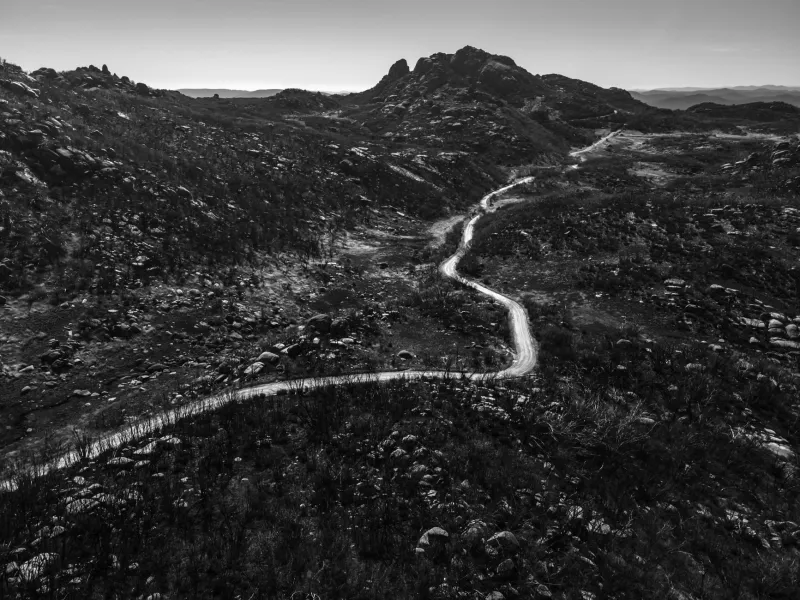
The Australian landscape — vast, indifferent, deeply strange to foreign eyes — becomes a character in itself when used well. A surveillance operation conducted in the Northern Territory reads completely differently from one in Vienna. There's nowhere to hide in the same way. The isolation is both literal and psychological. Filmmakers who've grown up with that landscape understand how to weaponise it narratively.
Beyond the outback, Australian cities offer something underused in the genre: genuine multicultural complexity. Sydney and Melbourne are among the most diverse cities on earth, with significant communities from Southeast Asia, East Asia, the Middle East, and the Pacific. For spy narratives that want to explore the texture of modern intelligence work — the way it operates through diaspora communities, language barriers, and cultural code-switching — these cities are a goldmine. Australian directors who've lived in that complexity bring an authenticity to those stories that imported productions simply can't fake.
The ASIS Factor
Here's something that rarely gets discussed: Australia actually has a significant and genuinely fascinating intelligence apparatus. The Australian Secret Intelligence Service, the Australian Signals Directorate, and Australia's central role in the Five Eyes alliance make this country a serious player in global espionage — yet almost none of that has made it to screen in any meaningful way.
Australian filmmakers are starting to change that. There's growing interest in dramatising not just the operations themselves, but the bureaucratic and political machinery around them — the uncomfortable questions about who Australian intelligence serves, how it balances alliance obligations with national interest, and what it means to spy on behalf of a middle power in an increasingly fractured world.
Those are genuinely different questions from the ones James Bond or Jason Bourne ever had to grapple with, and they make for genuinely different drama.
Fresh Eyes on an Old Genre
Part of what makes Australian directors so effective in this space is precisely their outsider status within the genre's traditional power structures. They're not inheriting the same assumptions. A British director making a spy film is, consciously or not, working within a tradition that stretches back through le Carré and Fleming. An Australian director doesn't carry that same weight.
That freedom produces interesting results. Australian-led productions tend to be more willing to leave questions unanswered, to let the bureaucracy win, to show intelligence work as genuinely unglamorous. The hero doesn't always get the girl — or the mission, for that matter. There's a bleakness that feels earned rather than affectated.
At the same time, Australian filmmakers haven't abandoned entertainment. The genre's pleasures — tension, action, twists — are still very much present. But they sit alongside a moral seriousness that gives the best of this work real staying power.
What Comes Next
The pipeline looks genuinely exciting. With streaming platforms hungry for international content that feels distinct rather than derivative, Australian spy productions are finding audiences well beyond these shores. International co-productions are increasingly pulling Australian directors into projects set across the Indo-Pacific, recognising that local knowledge and perspective add something that can't be manufactured.
For audiences here at home, there's something genuinely thrilling about watching a genre that's always felt a bit foreign start to reflect our own world back at us — our geography, our alliances, our anxieties. The spy thriller has always been about the fears of its moment. Right now, a lot of those fears are very Australian.
The double agents are in position. The Aussies have arrived.