The Secret Weapon: How Australian Actors Became Hollywood's Go-To Spies
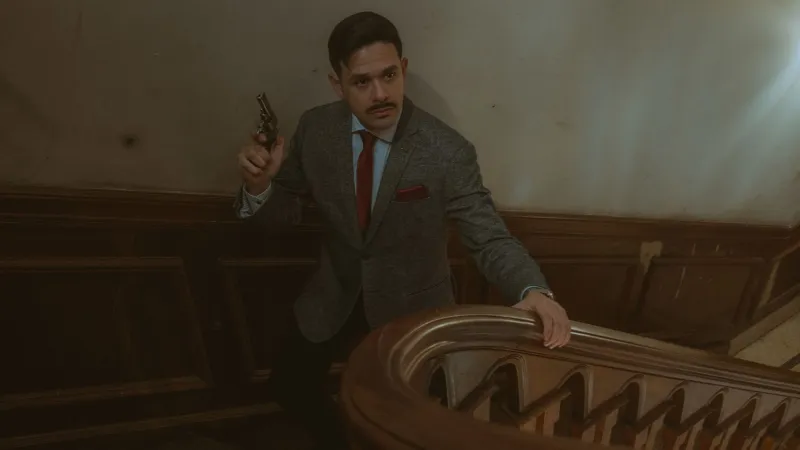
There's something quietly remarkable happening in Hollywood's most prestigious action corridors. When a major studio needs to cast a character who can disarm a bomb with their bare hands, stare down a corrupt intelligence chief without blinking, or deliver a morally ambiguous monologue in three languages — they keep reaching for an Australian passport. It's not a coincidence. It's a pattern, and it's been building for decades.
At Operation Oz, we've been watching this phenomenon unfold from the best seat in the house. So let's pull back the curtain on why Australian performers have become the genre's most reliable secret agents.
The Bourne Factor: Eric Bana and the Art of Controlled Intensity
If you want to trace a clear starting point for Australia's spy-thriller dominance, you could do a lot worse than looking at Eric Bana's career trajectory in the early 2000s. Before he strapped on the Hulk's purple trousers, Bana was already demonstrating the kind of coiled, interior-focused performance style that the genre demands. His work in Munich (2005) remains one of the most underrated espionage performances in modern cinema — a Mossad operative carrying the psychological weight of state-sanctioned violence across every frame.
What Bana brought to that role wasn't flash. It was restraint. And that's arguably the most Australian thing about it. There's a cultural tendency in our performers to underplay rather than oversell, to let the silence do the heavy lifting. In spy thrillers, where subtlety and menace need to coexist in the same expression, that instinct is absolute gold.
Cate Blanchett: When Intelligence Becomes the Weapon
Cate Blanchett has never technically played a spy in the traditional sense, but her recurring appearances in high-stakes action-thriller territory — Indiana Jones and the Kingdom of the Crystal Skull, The Talented Mr. Ripley's broader psychological thriller lineage, and her commanding turn in Thor: Ragnarok — reveal something essential about why Australian actors thrive in this space.
Blanchett operates on a frequency that suggests she knows things you don't. That quality — a kind of intellectual authority married to physical composure — is exactly what the espionage genre craves in its antagonists, handlers, and morally complex operatives. When she speaks, you believe she has contingency plans for her contingency plans. Studios have cottoned on to this. She doesn't need to fire a weapon to feel dangerous, and in the best spy films, the most threatening characters rarely do.
Her ability to shift between warmth and ice within a single scene, without telegraphing the transition, is a masterclass that younger Australian actors are clearly studying.
Guy Pearce and the Outsider's Edge
Guy Pearce is perhaps the most versatile entry in Australia's spy-adjacent hall of fame. From his breakthrough in L.A. Confidential — which, while technically a crime noir, shares enormous DNA with the espionage genre — to his work in Iron Man 3 as the calculating Aldrich Killian, Pearce has consistently demonstrated an ability to inhabit characters who operate outside conventional moral frameworks.
That outsider quality is worth examining. Many of Australia's finest performers carry a subtle sense of displacement, a slight remove from the mainstream that makes their characters feel genuinely unknowable. In a genre built on deception and hidden agendas, an actor who naturally projects a degree of inscrutability is an enormous asset. Pearce weaponises that quality brilliantly — you're never quite sure whose side he's really on, even when the script tells you explicitly.
What's in the Water? The Training Ground Theory
Industry observers have floated several theories about why Australian actors punch so far above their weight in this particular genre. The most compelling centres on training. Australian drama schools — NIDA, the VCA, WAAPA — place enormous emphasis on physical presence, voice work, and the ability to sustain emotional truth across long takes. These are precisely the skills that action-thriller directors prize.
There's also the matter of cultural context. Australian storytelling has a long tradition of morally complicated protagonists — think of our literary and cinematic history, from Ned Kelly to the sun-baked noir of classic Australian crime films. Our performers grow up absorbing narratives where heroes are flawed, authority is suspect, and survival often requires moral compromise. That's the exact psychological territory spy thrillers inhabit.
The New Wave: Who's Carrying the Torch?
The tradition is in safe hands with the current generation. Margot Robbie has demonstrated in Birds of Prey and beyond that she can anchor a physically demanding action-thriller with genuine charisma and edge. Jai Courtney has built an entire career in the franchise action space, appearing in Jack Reacher, the Divergent series, and Suicide Squad. Dacre Montgomery and Phoebe Dynevor are increasingly attracting attention from casting directors looking for the next generation of action leads.
But perhaps the most exciting name to watch is Joel Edgerton, whose work in Zero Dark Thirty as a special operations officer displayed exactly the kind of technical credibility and psychological depth that makes spy thrillers sing. Edgerton has the rare ability to make violence feel consequential rather than spectacular — and in an era where audiences are increasingly sophisticated about action cinema, that quality is invaluable.
Why It Matters for Australian Audiences
For those of us watching from this side of the world, there's genuine pride in seeing our talent dominate a genre that Hollywood treats as among its most prestigious. The spy thriller isn't just popcorn entertainment — at its best, it's a serious examination of power, loyalty, and the cost of operating in the shadows. That Australian performers keep getting called up for these roles says something meaningful about the quality of our creative industries.
Next time you're watching a tense interrogation scene or a beautifully choreographed action sequence and you notice that clipped, precise delivery or that unsettling calm behind the eyes — there's a decent chance you're watching someone who trained in Sydney, Melbourne, or Perth before they ever set foot on a Hollywood backlot.
And honestly? We wouldn't have it any other way.