Speak No Evil: Why Hollywood Is Still Muting Australian Actors in Their Own Stories
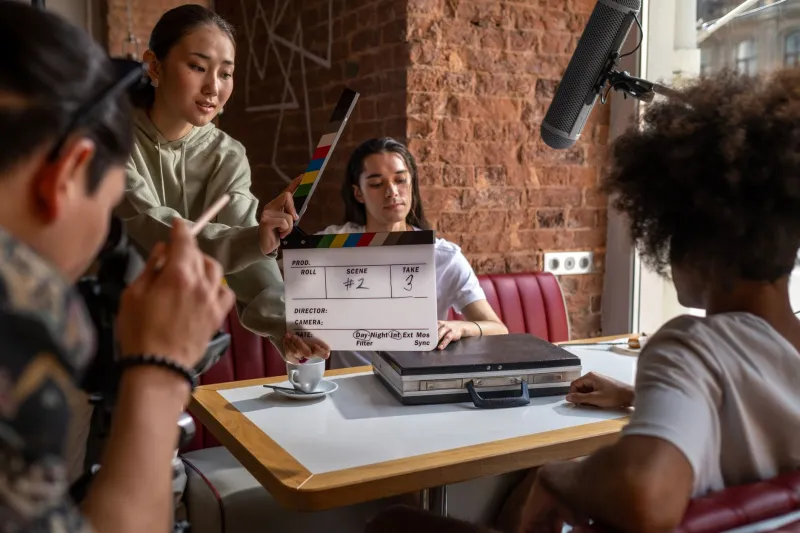
There's a particular kind of irony that plays out in casting rooms across Los Angeles and London on a fairly regular basis. An Australian actor walks in, nails the audition, lands the role — and then, somewhere between the callback and the first table read, someone suggests they "soften" their accent. Or drop it altogether. Even, sometimes, when the character they're playing grew up in Melbourne.
It sounds almost too absurd to be true. But ask around the local industry and you'll hear variations of this story more times than you'd expect.
The Invisible Edit
Australia has been exporting serious acting talent to Hollywood for decades. The names are familiar enough — Cate Blanchett, Chris Hemsworth, Margot Robbie, Hugo Weaving, Isla Fisher, Joel Edgerton. The list keeps going. What's less often discussed is the quiet negotiation that happens behind the scenes around how these performers are actually allowed to sound on screen.
In spy thrillers and action franchises especially, there's a long-standing industry assumption that a "neutral" American accent reads as more authoritative, more universal, more commercially safe. Accent coaches — a profession that does genuinely valuable work in many contexts — have noted that the brief from studios often leans heavily toward mid-Atlantic or general American, regardless of where a character is written to be from.
One Sydney-based dialect coach, who has worked with several actors transitioning to US productions, described the dynamic plainly: the accent conversation rarely happens at the script level. It happens in pre-production, quietly, and Australian talent often feel the pressure to comply before they've even had a chance to push back.
When the Character Is Literally Australian
The situation becomes genuinely puzzling when you look at projects where the Australian-ness of a character is written into the story itself — and yet the actor is still directed toward something approximating an American sound.
This isn't a new phenomenon. It stretches back through decades of Hollywood productions that would cast Australians for their range and charisma, then sand down the very quality that arguably made them distinctive in the first place. The logic, when pressed, usually comes back to perceived audience accessibility. The assumption — and it is an assumption, not a data-backed certainty — is that a strong Australian accent will create friction for American viewers.
What's fascinating is that this logic has never really been tested at scale. The few times Australian voices have been front and centre in major action or thriller productions, audiences haven't exactly recoiled. Eric Bana in Munich, for instance, or the genuinely distinct flavour that Australian performers brought to productions like The Pacific. The accent didn't hurt. If anything, it added texture.
Casting Directors Caught in the Middle
It would be unfair to paint casting directors as the villains here. Many of them are operating within briefs handed down from studios and producers who are, in turn, responding to what they believe financiers and distributors want. The pressure is systemic, not personal.
But some casting professionals have started pushing back, and the conversation is shifting — slowly. There's a growing recognition, particularly among independent and prestige TV productions, that authentic accents contribute to authentic storytelling. That asking a Tasmanian actor to perform as though they grew up in Ohio is a form of creative compromise that doesn't serve the story.
The spy thriller genre, interestingly, is one of the spaces where this tension is most visible. The genre has always traded on exoticism — on the idea that operatives move through different worlds, carrying different identities. An Australian character in a spy context should, in theory, be a natural fit. The accent is part of the cover. The distinctiveness is the point.
Is Anything Actually Changing?
There are genuine signals that the industry is in the middle of a slow recalibration. The success of productions that lean into regional and national identity — rather than flattening it — has started to shift what studios are willing to greenlight. Streaming platforms, which operate with different commercial pressures than traditional theatrical distributors, have been more willing to let Australian performers sound like themselves.
Some Australian actors have also become more vocal about negotiating this upfront. Rather than waiting for the note to come in pre-production, they're having the conversation during initial discussions — establishing that the accent is part of the performance, not separate from it.
Margot Robbie has spoken in interviews about navigating this dynamic throughout her career. The expectation to default to American was present early on, and pushing against it required a degree of leverage that not every actor has access to. That's a significant part of the problem — the ability to hold your ground on something like this often correlates with how much bargaining power you already have.
What's Actually at Stake
Beyond the individual career negotiations, there's a broader cultural question worth sitting with. When Australian stories — or stories featuring Australian characters — are consistently filtered through an American vocal register, something gets lost. Not just authenticity in a surface-level sense, but the specific way that identity shapes character. The rhythms of Australian speech carry cultural information. They signal class, region, background, sensibility. Strip that out and you're left with a performance that's technically proficient but slightly hollow.
For Australian audiences watching these films, there's often a low-level cognitive dissonance that's hard to articulate but easy to feel. You know the actor. You know where they're from. You watch them perform in a voice that isn't quite theirs, playing a character who is supposedly one of us — and something doesn't quite land.
The spy genre, with its obsession with false identities and hidden truths, is almost tailor-made to explore this tension. There's rich creative territory in a character who is performing one nationality while carrying another inside them. Hollywood has largely left that territory unexplored, opting instead for the easier path of simply erasing the original voice.
The Accent as Asset
The most compelling argument for change isn't a cultural one — it's a commercial one. Australian talent is in high demand precisely because of what makes Australian performers distinctive. The physicality, the training, the particular quality of presence that keeps showing up in action and thriller casting. The accent is part of that package, not a liability attached to it.
As the global appetite for non-American storytelling continues to grow — and streaming data suggests it genuinely is — the case for letting Australian actors sound like themselves becomes harder to argue against. The Aussie accent isn't a problem to be managed. For the right story, told the right way, it's the whole point.
Hollywood is starting, very slowly, to figure that out. Whether it figures it out fast enough to stop asking our best performers to disappear inside someone else's voice is the question worth watching.