Punching Above Its Weight: How Australian Spy Cinema Is Rewriting the Genre Rulebook

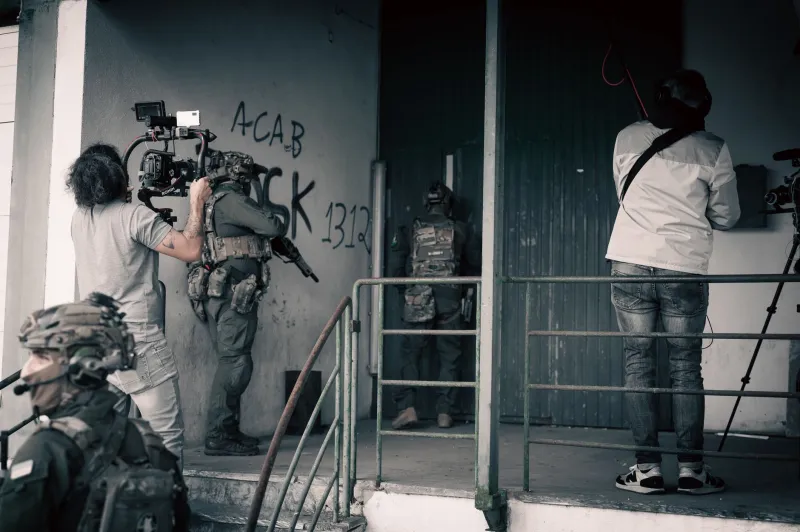
Photo by Photo by Dylan Shaw on Unsplash on Unsplash
Spy thrillers live and die by a specific set of promises: tension, intrigue, locations that feel exotic and dangerous, and protagonists who are always one step ahead — until they're not. For decades, those promises were almost exclusively delivered by massive American and British studios with the budgets to match. But something has been shifting, and Australian cinema is at the centre of it.
Local filmmakers, producers, and streaming platforms have been quietly building a body of spy and espionage content that doesn't just hold its own against the international competition — in several key areas, it surpasses it. The secret? A combination of unique geography, narrative restraint, and a willingness to subvert the genre's most tired conventions.
Let's break down exactly how Australian spy content is making its mark, ranked by the creative strategies that are proving most effective.
1. The Landscape as a Character (Not Just a Backdrop)
This is the single biggest advantage Australian spy cinema has over its international competition, and the best local productions lean into it hard. Forget the cobblestoned streets of Prague or the rooftops of Istanbul. When Australian filmmakers set their espionage stories in the red dirt of the Pilbara, the dense bush of Far North Queensland, or the brutalist architecture of Canberra's government quarter, they're offering audiences something genuinely unfamiliar.
Unfamiliarity is gold in the spy genre. Part of what makes a thriller thrilling is the sense that the protagonist is operating in territory where the rules are different and danger could come from any direction. Australian landscapes deliver that instinctively. The isolation of the outback, the claustrophobia of dense coastal scrub, the eerie stillness of a regional town — these settings create tension without a single line of dialogue.
Productions that have understood this have used Australian geography to do heavy narrative lifting that would otherwise require expensive set design or location budgets. The environment becomes a co-conspirator.
2. Narrative Restraint Over Spectacle
Here's where Australian spy content diverges most sharply from the Hollywood template. Rather than escalating toward bigger set pieces and louder action sequences, the strongest local entries tend to do the opposite — they pull back, tighten the focus, and invest in psychological complexity over physical spectacle.
This isn't just a budget-driven choice, though the economics certainly encourage it. Australian storytelling in the thriller space has a long tradition of favouring character interiority over external action. The tension in the best local spy narratives often comes from what isn't said, what isn't shown, and what the audience suspects but can't confirm.
That restraint is actually more aligned with the foundational texts of spy fiction — think le Carré rather than Bond — and it gives Australian productions a literary credibility that big-budget Hollywood entries sometimes lack. When a local thriller chooses a quiet, morally ambiguous ending over an explosive finale, it's not a compromise. It's a statement.
3. Budget Creativity That Becomes Stylistic Signature
Smaller budgets force invention, and the spy genre is surprisingly amenable to creative solutions. Surveillance scenes that might cost a fortune to shoot conventionally can be reimagined as something more unsettling and intimate. Chase sequences can be replaced with sequences of anticipation and near-miss tension that are, frankly, more effective at generating audience anxiety.
Australian productions have been particularly inventive in this space. The use of natural sound design to build dread, the decision to withhold visual information that a bigger production would show explicitly, the reliance on performance over spectacle — these aren't workarounds. They're genuine craft choices that have become identifiable features of Australian genre filmmaking.
When audiences and critics describe local spy content as "taut" or "atmospheric," they're often responding to exactly this kind of budget creativity translated into aesthetic identity.
4. Distribution Strategy: The Streaming Advantage
One of the structural changes that has most benefited Australian spy content is the rise of streaming platforms with genuine appetite for international genre material. A decade ago, a locally produced espionage thriller might struggle to find distribution beyond domestic free-to-air or limited festival circulation. Today, the same film or series can land on a global platform and reach audiences in 190 countries on the same day.
That shift has changed what's possible for Australian productions at every budget level. It's no longer necessary to secure a major international distributor before production begins — the streaming model allows for a direct relationship between the content and a global audience. For spy thrillers, which have a passionate and genuinely international fanbase, this is transformative.
Australian producers who have understood this early have structured their projects accordingly — building in the production values and narrative hooks that streaming algorithms and platform curators respond to, while retaining the distinctly local qualities that make the content stand out in a crowded market.
5. Authentic Intelligence: The ASIS Factor
There's one final ingredient that Australian spy content has access to that its international competitors often don't: genuine proximity to a real and largely unexamined intelligence apparatus. The Australian Secret Intelligence Service, the Australian Security Intelligence Organisation, and the broader Five Eyes framework give Australian storytellers rich material that hasn't been thoroughly mined by decades of pop culture the way the CIA and MI6 have.
Audiences globally are curious about intelligence communities they haven't seen dramatised before. Australian spy stories that engage seriously with the actual structures, cultures, and moral dilemmas of local intelligence work have an inherent novelty that creates immediate interest. The stories feel fresh because, in a meaningful sense, they are.
Filmmakers who do their research — who understand how Australian intelligence actually operates, what its priorities are, and where its tensions lie — are sitting on material that no amount of budget can replicate. Authenticity, in the spy genre, is its own kind of spectacle.
The Verdict
Australian spy cinema isn't trying to be Bond. It's not attempting to out-Bourne Bourne or out-Mission Impossible Mission Impossible. It's doing something more interesting — it's finding the version of the genre that only it can tell, and telling it with increasing confidence and craft. That's not a consolation prize. That's a competitive advantage.