Speak American or Stay Home: The Hidden Voice Tax on Aussie Actors in Hollywood Spy Films
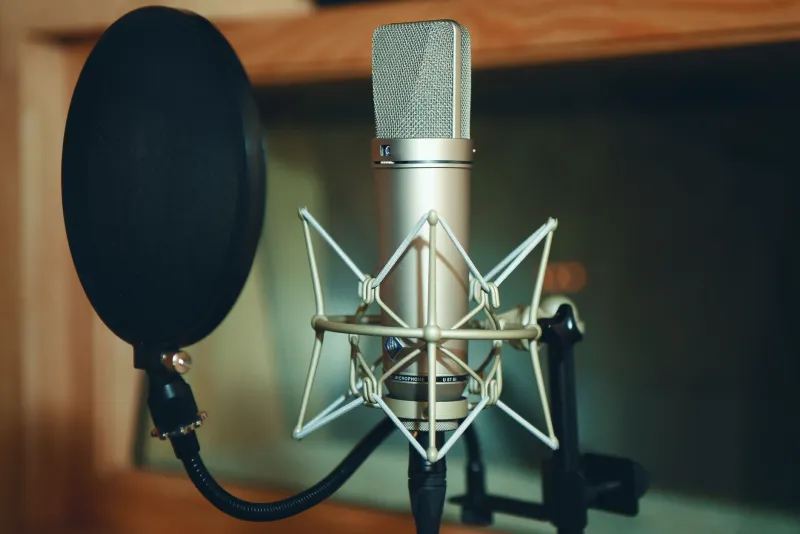
There's a particular kind of audition that Australian actors dread. Not the cold read, not the chemistry test, not even the screen test in front of a room full of executives. It's the moment — sometimes subtle, sometimes brutally direct — when a casting director says: "Can you do that again, but maybe less... Australian?"
For anyone who's followed the careers of our best exports, this won't come as a shock. But the extent to which accent modification shapes — and sometimes derails — the careers of Australian talent in Hollywood's spy and action space is only now being talked about openly. And what's emerging from those conversations is uncomfortable.
The Unwritten Rule Nobody Puts in the Contract
Hollywood has never been particularly subtle about its preferences. American audiences, the thinking goes, want American heroes. Or at the very least, heroes who sound like they could be American. For spy thrillers specifically — a genre built on codes, deception, and the carefully constructed persona — an accent that reads as "foreign" can be seen as a casting problem rather than an asset.
Dialect coach Renata Voss, who has worked extensively with actors transitioning between Australian and American productions, describes the pressure as systemic. "It's rarely written into a brief," she explains. "But the expectation is communicated through feedback. An actor will be told their read was great, their physicality was perfect — and then they're passed over. When they dig into why, the accent almost always comes up."
The irony, of course, is that spy franchises are fundamentally about performance and disguise. The entire premise of a spy is someone who can become whoever the mission demands. Yet when it comes to casting, Hollywood often demands that transformation begin before the cameras roll — and at the actor's expense.
What It Actually Costs
The financial and logistical side of accent modification is rarely discussed, but it's real. Top-tier dialect coaches in Los Angeles charge anywhere from $150 to $400 USD per hour, and serious accent work for a major franchise role can involve months of sessions before a single scene is shot. For actors who are still building their profiles — not yet at the Hemsworth or Robbie level — that's a significant personal investment with no guarantee of return.
But the psychological dimension is where things get genuinely heavy. Speaking to several Australian actors who've navigated this process (most of whom asked not to be named, which itself says something), a common theme emerges: the sensation of becoming a stranger to yourself.
"You spend your whole life developing a voice," one actor told us. "The way you talk is tied to your family, your suburb, your whole identity. And then you're essentially told that version of you isn't castable. You have to unlearn it. That doesn't just stay at work."
Some describe a kind of dissociation — where months of accent drilling bleeds into their off-set life, making casual conversations feel performative. Others talk about a creeping imposter syndrome: the sense that they've been hired not for who they are, but for how convincingly they can pretend not to be Australian.
The Rare Exceptions — and What They Tell Us
It would be dishonest to pretend the picture is entirely bleak. There are instances where Australian accents have made it through Hollywood's filter intact — and they're worth examining closely, because the pattern is revealing.
Generally speaking, an Australian accent survives in American spy or action content under one of three conditions: the character is explicitly written as Australian, the actor's star power is large enough that the studio adapts to them rather than the reverse, or the accent is reframed as a quirky differentiator rather than a narrative obstacle.
Chris Hemsworth's Thor — not a spy, admittedly, but very much an action franchise cornerstone — speaks to that second condition. At a certain level of fame, the calculus flips. The accent becomes part of the brand. But getting to that level typically requires having already compromised on it earlier in your career. It's a trap with a narrow exit.
The first condition — writing the character as explicitly Australian — remains frustratingly rare in the spy genre specifically. The genre's DNA is Anglo-American, and franchise holders have been slow to interrogate that. When Australian characters do appear in spy thrillers, they're often comic relief, support roles, or villains — rarely the lead operative whose voice anchors the film.
What Dialect Coaches Actually See in the Room
Speak to enough dialect coaches and a more nuanced picture starts to form. Yes, the pressure to modify accents is real. But coaches working with Australian talent also describe something interesting: Australian actors are, on average, exceptionally good at this work.
"There's something about the way Australians learn to code-switch socially — particularly those who grew up between different communities or moved between cities — that makes them very adaptable vocally," says one coach who works across both Sydney and LA. "They're often quicker to acquire an American accent than British or European actors. Which makes the whole situation even more frustrating, because the talent is clearly there."
The aptitude, in other words, isn't the issue. The assumption that the accent needs to go in the first place is where the problem lives.
The Career Calculation Nobody Wants to Make Aloud
For working Australian actors with serious franchise ambitions, the accent question becomes a cold strategic calculation. Do you invest in accent modification early, signalling flexibility to American casting directors? Or do you hold your ground, risk being passed over repeatedly, and hope that the industry's slow drift toward authentic casting eventually reaches spy thrillers?
Most, pragmatically, do some version of the former. And most are quietly resentful about it.
What's changing — slowly, but perceptibly — is the conversation happening around this. Younger Australian actors are increasingly vocal about the double standard. British accents, after all, have long been considered an asset in spy casting. The BBC-polished vowels of a Daniel Craig or a Benedict Cumberbatch carry prestige. The Australian equivalent is treated as a problem to be solved.
The argument that this is simply about market preference doesn't hold up to scrutiny. Australian content — from Rake to Top of the Lake to Stateless — has found massive international audiences without anyone being asked to sound less Australian. The demand exists. The genre just hasn't caught up yet.
Where This Leaves Us
For now, the accent tax remains part of the deal for most Australians chasing Hollywood's spy thriller dream. The unspoken rules are still very much in place, the coaching bills still land in actors' inboxes, and the psychological cost of performing a version of yourself that's been strategically de-Australianised still doesn't appear anywhere in the production budget.
But the fact that people are talking about it — openly, on the record, with frustration rather than resignation — suggests something is shifting. Operation Oz will be watching closely. Because if there's one thing a good spy story teaches you, it's that the most powerful weapon is knowing the rules of the game you're being forced to play.